
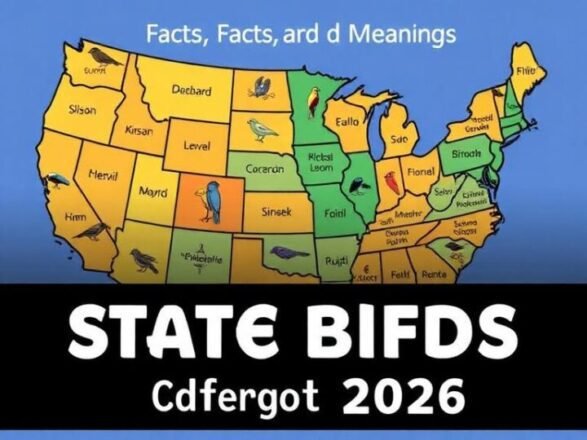
Discover all 50 U.S. state birds with facts, history, photos, and trivia. From the northern cardinal (7 states) to unique picks like the cactus wren and nēnē. Complete updated list for 2026.
State Birds of the United States: Complete 2026 Guide to All 50 Official Avian Symbols
State birds are beloved symbols of regional pride, chosen to reflect a state’s natural beauty, history, culture, or unique wildlife. Every U.S. state (plus Washington, D.C., and several territories) has designated an official bird, often through legislative action sparked by schoolchildren, garden clubs, or conservation efforts. The practice began in the early 20th century, with Kentucky adopting the northern cardinal in 1926 as the first official state bird.
In this comprehensive guide, we explore the full list of U.S. state birds (updated for 2026—no major changes since the last adoptions), including scientific names, adoption years, fun facts, meanings, shared species, and why these feathered ambassadors matter. Whether you’re a birdwatcher, student doing a report, or planning a cross-country road trip to spot your state’s symbol, this long-form resource has you covered.
1. Introduction to U.S. State Birds
State birds serve as official emblems that celebrate biodiversity and local identity. Unlike national symbols (e.g., the bald eagle as the U.S. national bird), state birds highlight regional differences—from desert dwellers to forest songbirds. Most were chosen between the 1920s and 1950s, often via public campaigns or school petitions. Today, they inspire birding, education, conservation, and even tourism (e.g., “state bird trails”).
2. History of State Bird Designations
Kentucky led the way in 1926 with the northern cardinal. By the 1930s, many states followed. The last continental state to adopt one was Arizona (cactus wren, 1973). Hawaii chose the nēnē in 1957. Territories like Guam added birds later (e.g., ko’ko’ in 2000). No state has changed its bird in recent decades.
3. Most Popular State Birds (Shared Species)
Some birds are so iconic that they represent multiple states:
- Northern Cardinal (Cardinalis cardinalis) — 7 states (Illinois, Indiana, Kentucky, North Carolina, Ohio, Virginia, West Virginia). Bright red plumage, cheerful song, year-round resident.
- Western Meadowlark (Sturnella neglecta) — 6 states (Kansas, Montana, Nebraska, North Dakota, Oregon, Wyoming). Melodious flute-like song symbolizes open plains.
- Northern Mockingbird (Mimus polyglottos) — 5 states (Arkansas, Florida, Mississippi, Tennessee, Texas). Master mimic; bold defender of nests.
- American Robin (Turdus migratorius) — 1 primary (Connecticut), but widespread.
- American Goldfinch (Spinus tristis) — 3 states (Iowa, New Jersey, Washington — “willow goldfinch” variant).
4. Unique State Birds (One State Only)
Many birds represent just one state, showcasing local pride:
- Nēnē (Hawaiian Goose) — Hawaii’s endangered native goose.
- Greater Roadrunner — New Mexico’s speedy desert icon.
- Cactus Wren — Arizona’s largest North American wren.
- Willow Ptarmigan — Alaska’s camouflaging arctic bird.
- Lark Bunting — Colorado’s black-and-white prairie singer.
5. Complete List of All 50 U.S. State Birds (2026)
Here’s the full alphabetical list with scientific name, year adopted, and key facts:
- Alabama: Northern Flicker (Yellowhammer) – Colaptes auratus (1927). Woodpecker with golden underwings; nicknamed for Civil War soldiers.
- Alaska: Willow Ptarmigan – Lagopus lagopus (1955). Changes plumage seasonally (white in winter); hardy in tundra.
- Arizona: Cactus Wren – Campylorhynchus brunneicapillus (1973). Builds large nests in cacti; loud, chatty song.
- Arkansas: Northern Mockingbird – Mimus polyglottos (1929). Mimics sounds; aggressive nest defender.
- California: California Quail – Callipepla californica (1931). Plumed head; “chi-ca-go” call; state symbol of group living.
- Colorado: Lark Bunting – Calamospiza melanocorys (1931). Males turn black in breeding season; prairie grassland dweller.
- Connecticut: American Robin – Turdus migratorius (1943). Early spring harbinger; “cheerily” song.
- Delaware: Delaware Blue Hen Chicken – (domestic) (unofficial 1939, symbolic). Not wild; represents fighting spirit.
- Florida: Northern Mockingbird – Mimus polyglottos (1927). Versatile mimic; thrives in suburbs.
- Georgia: Brown Thrasher – Toxostoma rufum (1935). Long-tailed; rich, varied song.
- Hawaii: Nēnē (Hawaiian Goose) – Branta sandvicensis (1957). Endangered; state conservation success story.
- Idaho: Mountain Bluebird – Sialia currucoides (1931). Sky-blue male; cavity nester in mountains.
- Illinois: Northern Cardinal – Cardinalis cardinalis (1929). Vivid red; year-round resident.
- Indiana: Northern Cardinal – Cardinalis cardinalis (1933).
- Iowa: American Goldfinch – Spinus tristis (1973). Bright yellow in summer; thistle seed eater.
- Kansas: Western Meadowlark – Sturnella neglecta (1925, unofficial; 1947 official).
- Kentucky: Northern Cardinal – Cardinalis cardinalis (1926). First state bird.
- Louisiana: Brown Pelican – Pelecanus occidentalis (1966). Dramatic plunge diver; recovered from endangerment.
- Maine: Black-capped Chickadee – Poecile atricapillus (1927). “Chick-a-dee-dee” call; fearless visitor to feeders.
- Maryland: Baltimore Oriole – Icterus galbula (1947). Fiery orange; hangs pouch nests.
- Massachusetts: Black-capped Chickadee – Poecile atricapillus (1941).
- Michigan: American Robin – Turdus migratorius (1931).
- Minnesota: Common Loon – Gavia immer (1961). Iconic yodel; dives deep for fish.
- Mississippi: Northern Mockingbird – Mimus polyglottos (1944).
- Missouri: Eastern Bluebird – Sialia sialis (1927). “Bluebird of happiness”; cavity nester.
- Montana: Western Meadowlark – Sturnella neglecta (1931).
- Nebraska: Western Meadowlark – Sturnella neglecta (1929).
- Nevada: Mountain Bluebird – Sialia currucoides (1967).
- New Hampshire: Purple Finch – Haemorhous purpureus (1957). Raspberry-colored male.
- New Jersey: American Goldfinch – Spinus tristis (1920).
- New Mexico: Greater Roadrunner – Geococcyx californianus (1949). Runs up to 20 mph; eats snakes.
- New York: Eastern Bluebird – Sialia sialis (1970).
- North Carolina: Northern Cardinal – Cardinalis cardinalis (1943).
- North Dakota: Western Meadowlark – Sturnella neglecta (1947).
- Ohio: Northern Cardinal – Cardinalis cardinalis (1933).
- Oklahoma: Scissor-tailed Flycatcher – Tyrannus forficatus (1951). Long tail streamers; acrobatic hunter.
- Oregon: Western Meadowlark – Sturnella neglecta (1927).
- Pennsylvania: Ruffed Grouse – Bonasa umbellus (1931). Drumming display; forest game bird.
- Rhode Island: Rhode Island Red Chicken – (domestic) (1954). Hardy farm breed.
- South Carolina: Carolina Wren – Thryothorus ludovicianus (1948). Loud “teakettle” song.
- South Dakota: Ring-necked Pheasant – Phasianus colchicus (1943). Introduced game bird.
- Tennessee: Northern Mockingbird – Mimus polyglottos (1927).
- Texas: Northern Mockingbird – Mimus polyglottos (1927).
- Utah: California Gull – Larus californicus (1955). Heroic crop-saver in 1848 “Miracle of the Gulls.”
- Vermont: Hermit Thrush – Catharus guttatus (1941). Flute-like song in the woods.
- Virginia: Northern Cardinal – Cardinalis cardinalis (1950).
- Washington: American Goldfinch – Spinus tristis (1951).
- West Virginia: Northern Cardinal – Cardinalis cardinalis (1949).
- Wisconsin: American Robin – Turdus migratorius (1949).
- Wyoming: Western Meadowlark – Sturnella neglecta (1927).
6. State Birds by Region & Habitat
- Northeast: Songbirds like chickadees, robins, and bluebirds.
- Southeast: Cardinals, mockingbirds, thrashers.
- Midwest/Plains: Meadowlarks, buntings, goldfinches.
- West/Southwest: Quail, wrens, roadrunners, bluebirds.
- Alaska/Hawaii: Ptarmigan, nēnē — adapted to extreme environments.
7. Fun Facts & Trivia About State Birds
- The northern cardinal is the most popular (7 states) due to its striking color and song.
- Only two domestic birds: Delaware Blue Hen and Rhode Island Red.
- Utah’s gull honors a miracle where birds ate crickets threatening crops.
- No state shares the bald eagle (national bird).
- Many states chose birds via children’s campaigns or Audubon societies.
8. Conservation Status of State Birds
Several species are of concern: nēnē (endangered but recovering), eastern bluebird (benefited from nest boxes), and California quail (declining in some areas). State bird status often boosts awareness and protection efforts.
9. How to Attract Your State Bird to Your Yard
Tips: Native plants, feeders (sunflower for cardinals/goldfinches, suet for flickers), water sources, nest boxes for bluebirds/chickadees.
10. State Birds in Culture & Education
Featured in schools, festivals, license plates, and art. Many inspire “birding by ear” apps and citizen science projects like eBird.
11. Territories & D.C. State Birds
- Washington, D.C.: Wood Thrush
- Puerto Rico: Puerto Rican Spindalis (reinita)
- Guam: Ko’ko’ (Guam rail)
12. Why State Birds Still Matter in 2026
They promote biodiversity education, connect people to nature, and support conservation amid climate change and habitat loss.
13. FAQs About U.S. State Birds
Q: Which bird is the state bird for the most states?
A: Northern cardinal (7 states).
Q: What is the only woodpecker state bird?
A: Northern flicker (Alabama).
Q: Does any state have no state bird?
A: No—all 50 have one.
Q: Can states change their bird?
A: Yes, but none have recently.
Q: What’s the rarest state bird?
A: Nēnē (Hawaii)—once near extinction.
Q: Why did Utah choose a gull?
A: For saving pioneer crops from insects in 1848.
14. Conclusion
U.S. state birds are more than symbols—they’re living ambassadors of each state’s natural heritage. From the fiery cardinal to the elusive ptarmigan, they remind us of the diversity and beauty across America.