Gambling in the 1920s: The Underground Era That Built Modern Betting

The roaring twenties were defined by cultural shifts, but beneath the glitz lay a booming underworld where gambling in the 1920s became a multi-million dollar enterprise.
Introduction
Imagine a city where the law says you can’t drink, can’t gamble, and can’t do much of anything the government considers vice. Now imagine that same city on a Friday night (jazz pouring out of basement windows, champagne flowing freely, and poker chips stacking higher than any casino dealer had ever been permitted to stack them). The decade is famous for Prohibition, but the underground empire of gambling in the 1920s didn’t disappear just because legislators wanted it to; it merely changed its address.
That was America in the 1920s.
Gambling in the 1920s didn’t disappear just because legislators wanted it to. It went underground, got organized, got violent, got glamorous, and in the process laid the foundation for every major gambling institution that exists today, from Las Vegas to the modern sportsbook to the numbers games that evolved into state lotteries.
The decade is famous for Prohibition. What’s less appreciated is that the same forces that drove drinking underground did exactly the same thing to gambling, and the results were remarkably similar. The same criminal networks that ran bootleg liquor operations diversified into gambling. The same speakeasies that served illegal alcohol hosted illegal card games and roulette wheels. The same corrupt police forces that looked the other way on booze looked the other way on betting.
The 1920s didn’t create gambling culture in America or Europe. But they transformed it, from scattered, disorganized vice into something that looked, in structure and scale, almost exactly like modern organized gambling. Just without the licenses.
This is the story of gambling in the 1920s: who ran it, who played it, how it worked, and why it matters for understanding everything that came after.
What Was Gambling Like in the 1920s?
To understand gambling in the 1920s, you have to understand the legal landscape, which was simultaneously restrictive on paper and almost entirely unenforced in practice. While horse racing maintained a thin veil of legality in several states, the vast majority of gambling in the 1920s operated entirely outside the boundaries of formal law.
By 1920, most forms of gambling were technically illegal across the majority of American states. The Progressive Era reform movement of the preceding decades had successfully pushed through anti-gambling legislation in state after state, driven by religious organizations, temperance movements, and moral reformers who viewed gambling as a social ill on par with alcohol and prostitution.
The Volstead Act of 1919, which implemented the 18th Amendment and launched Prohibition, became law in January 1920. But anti-gambling statutes had preceded it in most jurisdictions.
The practical effect in both cases was the same: the activity didn’t stop. It went underground. And in going underground, it became far more profitable, far more organized, and far more dangerous than it had been when operating in the open.
Horse Racing: The Legal Exception
The one significant exception to gambling illegality was horse racing, which maintained legal status in several states throughout the 1920s through a combination of lobbying, cultural prestige, and the fiction that betting on horses was a matter of skill rather than chance.
New York, Kentucky, Maryland, and several other states allowed pari-mutuel betting at racetracks, where bettors wagered against each other rather than against the house, with the track taking a percentage. This legal loophole made horse racing the dominant legal gambling activity of the era and helped create the sport’s enduring cultural prestige.
The Kentucky Derby, the Preakness Stakes, and the Belmont Stakes (the Triple Crown races) were already established events by the 1920s, drawing enormous crowds and serious money. The tracks were among the few places where wealthy gamblers, working-class bettors, and everyone in between could place a legal bet.
Prohibition and the Gambling Connection
The relationship between Prohibition and gambling in the 1920s is inseparable. They weren’t parallel phenomena, they were the same phenomenon, run by the same people, through the same infrastructure.
When the Volstead Act drove alcohol underground, it created an immediate opportunity for entrepreneurial criminals. The demand for alcohol didn’t disappear, if anything, it intensified with the forbidden fruit effect. Someone needed to supply it. The people who stepped up to meet that demand built distribution networks, bribed officials, managed violence, and accumulated enormous capital in a remarkably short time.
Those same people (Al Capone’s Chicago Outfit, Arnold Rothstein’s New York operation, the nascent Jewish Mob led by figures like Meyer Lansky and Bugsy Siegel) recognized that their infrastructure could serve multiple vice markets simultaneously.
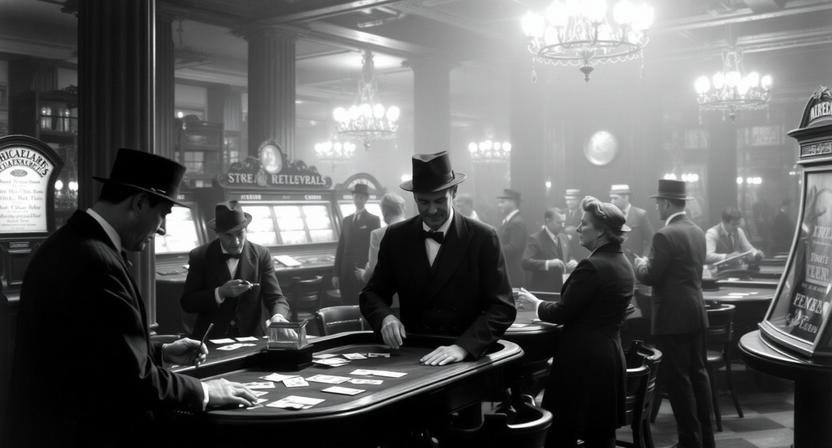
A speakeasy that served illegal alcohol could just as easily host a poker room or a roulette wheel in the back. The customers were already breaking the law to be there. The operators were already paying police for protection. Adding gambling to the menu was operationally trivial and financially significant.
By the mid-1920s, the major organized crime operations in American cities were running integrated vice enterprises: alcohol, gambling, and in some cases prostitution, all managed through the same corrupt political and law enforcement relationships.
Key Figures of the Underground Scene
Arnold Rothstein: The Architect
Mob kingpins like Arnold Rothstein completely structuralized the market, turning gambling in the 1920s into a corporate-style syndicate.
Rothstein was known variously as “The Brain,” “The Big Bankroll,” and “Mr. Big.” He was a New York gambler, loan shark, and organized crime financier who operated at the intersection of legitimate society and criminal enterprise with a sophistication that made him genuinely unique.
He was wealthy enough to bankroll other criminals’ operations, well-connected enough to dine with politicians, and skilled enough as a gambler that contemporaries genuinely believed he could win at anything. He probably couldn’t, but he was smart enough to only gamble when he had an edge, and ruthless enough to create edges that didn’t naturally exist.
Rothstein is most famously associated with the 1919 Black Sox scandal (the fixing of the World Series) which technically predates the 1920s but defined the era’s relationship between gambling, organized crime, and American sport.
The Black Sox scandal was the moment America confronted the fact that gambling had corrupted its national pastime. Eight Chicago White Sox players were accused of intentionally losing the 1919 World Series in exchange for payments organized through Rothstein’s network. Though Rothstein was never convicted, the scandal permanently altered the relationship between professional sports and gambling, creating the strict separation between leagues and betting that only began dissolving with sports betting legalization nearly a century later.
Rothstein was shot in 1928 at the Park Central Hotel in New York because of a gambling debt gone violently wrong. His death was front-page news. His protégés (Lansky, Siegel, Lucky Luciano) took what he’d built and turned it into the American organized crime structure that would run gambling operations for the next half century.
The Numbers Game: Gambling for the People
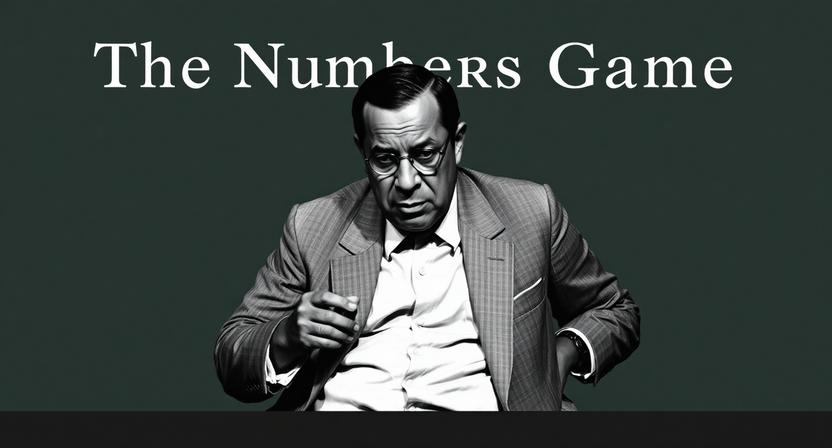
While wealthy gamblers played at private clubs and illegal casinos, working-class Americans found their gambling outlet in the numbers game, one of the most significant and historically underappreciated gambling phenomena of the 20th century.
The numbers game was simple. Bettors chose a three-digit number and wagered a small amount, typically a few cents to a dollar. If their number matched the day’s “winning number” (derived from some public, theoretically unmanipulable source like racetrack payouts or stock market figures) they won, typically at odds of 600:1. The actual probability of winning was 1 in 1,000, giving the house a built-in edge of 40%.
The genius of the numbers game was its accessibility. You didn’t need to go anywhere. A “runner” collected bets from workers, neighbors, and businesses in a specific territory. You could bet a nickel. The winning number was published in the newspaper, making it verifiable and, crucially, perceived as fair.
Numbers in Harlem
The numbers game became particularly embedded in Harlem, where it was a central economic institution during the 1920s. The Harlem Renaissance (the extraordinary flowering of Black cultural and intellectual life during this period) coexisted with a parallel underground economy built largely on numbers gambling.
Harlem numbers bankers like Casper Holstein, Stephanie St. Clair (known as “Queenie”), and later Dutch Schultz (who violently took over Harlem’s numbers operations in the early 1930s) controlled operations that generated millions of dollars annually from a neighborhood the mainstream economy largely excluded.
The social function of the numbers game in Black urban communities was complex. On one hand, it extracted money from communities that could ill afford to lose it. On the other hand, the operators, particularly the Black-owned operations before mob takeover, reinvested in the community, provided employment, and operated a form of credit and social welfare that formal institutions denied.
Stephanie St. Clair, who fought Dutch Schultz’s takeover with a ferocity that ultimately contributed to his murder, is one of the most remarkable figures in American gambling history. She was a Black woman running a criminal empire in 1920s New York, outmaneuvering gangsters for years through a combination of legal savvy, community support, and sheer nerve.
The numbers game would survive as an urban institution for decades. When states began introducing legal lotteries in the 1960s and 1970s, they were essentially legalizing and taxing what the numbers game had been doing underground for fifty years, a fact that was not lost on people who had been arrested for running it.
Illegal Casinos: The Underground Palaces
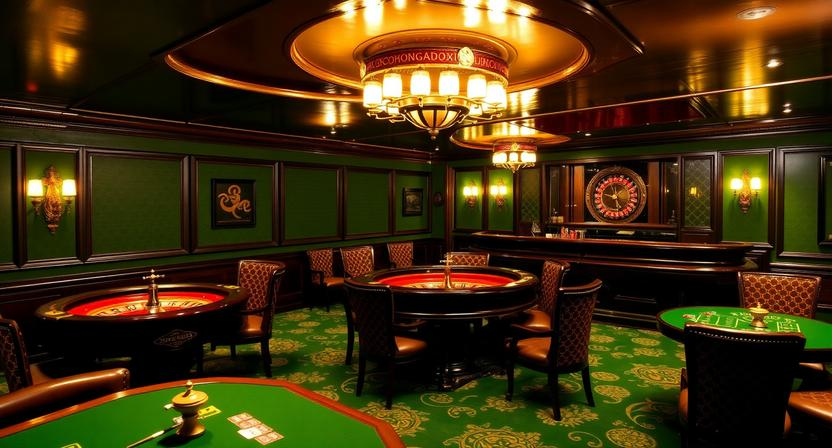
To understand the sheer scale of illicit operations, one must look at how gambling in the 1920s transitioned from back alleys to luxury floating palaces.
New York’s Floating Casinos
New York City hosted some of the most sophisticated illegal gambling operations in the country. Because city police could be relied upon, with appropriate financial arrangements, to look the other way, operators ran facilities that were openly known, reasonably secure, and genuinely luxurious.
The floating casino concept (a gambling operation aboard a ship anchored just outside territorial waters) emerged during this period as a clever jurisdictional workaround. Guests would board a water taxi, travel a short distance offshore, and spend the evening gambling on a vessel that was legally beyond the reach of land-based law enforcement.
More common were the fixed-location parlors and clubs that operated under social club covers. The membership fee was the bribe. The amenities were roulette, poker, craps, and faro, an older card game that was rapidly dying out but remained popular in some circles.
Saratoga Springs: The Hidden Gambling Capital
While Las Vegas gets credit as America’s gambling city, Saratoga Springs, New York was arguably the gambling capital of America for most of the late 19th and early 20th centuries.
The combination of its famous horse racing track (Saratoga Race Course, established in 1863) and the luxury resort hotels that surrounded it made Saratoga a summer destination for the wealthy and the criminal elite alike. Illegal casinos operated openly throughout the 1920s, catering to the same wealthy visitors who came for the races.
The Casino at Saratoga, operated at various points by figures connected to organized crime, hosted games that would have been at home in Monte Carlo. The corruption was so comprehensive, the community so dependent on gambling revenue, and the clientele so socially powerful that law enforcement essentially never interfered.
This arrangement (illegal gambling operating openly because local economic and political interests were served by it) was repeated in dozens of American cities and towns throughout the 1920s. It’s the structural blueprint for the resort gambling economy that would eventually find legal expression in Nevada.
Chicago’s Gambling Landscape
Chicago under Al Capone’s organization in the mid-to-late 1920s was perhaps the most organized illegal gambling market in American history. The Outfit didn’t just run gambling, it monopolized it, imposing taxes on independent operators and eliminating those who refused to pay.
Capone’s organization ran wire rooms (operations that received horse racing results by telegraph and relayed them to bookmakers across the city) as well as casinos, numbers operations, and sports betting enterprises. The scale was staggering. Estimates of the Chicago Outfit’s gambling revenue in the late 1920s run into the tens of millions of dollars annually, equivalent to hundreds of millions in contemporary terms.
The Capone operation’s gambling infrastructure required something that would later define legitimate casino operations: systematic management of risk, careful accounting, and reliable enforcement of debts. The mob invented casino management because illegal gambling at scale required exactly the same operational sophistication that legal gambling would later formalize.
Gambling Technology of the 1920s
Modern gambling technology is defined by random number generators, streaming video, and mobile apps. 1920s gambling technology was defined by one invention above all others: the wire.
The racing wire (a telegraph-based system for transmitting horse racing results) was the internet of 1920s gambling. It allowed bookmakers in cities far from any racetrack to offer betting on races as they happened, receive results almost instantly, and pay out winners the same day.
Control of the wire was therefore control of sports betting. Moses Annenberg’s Nationwide News Service effectively monopolized the racing wire in the 1920s and 1930s, leasing access to bookmakers across the country and generating enormous revenue. His son, Walter Annenberg, would later use the fortune to build a media empire and become Richard Nixon’s ambassador to the United Kingdom.
The wire service created the infrastructure for the modern off-track betting market. Before it existed, betting on a horse race meant physically attending the track. The wire made sports betting a national industry that operated independently of any particular venue.
This infrastructure (centralized information combined with distributed betting points) is structurally identical to how modern sports betting platforms and betting apps operate. The technology changed. The model didn’t.
Gambling Psychology in the 1920s
Here’s a counterintuitive finding that gambling researchers have documented extensively: making gambling illegal doesn’t reduce its appeal. For many people, it increases it. The element of illegal risk didn’t deter the public; instead, the thrill of entering a hidden speakeasy made gambling in the 1920s culturally compelling and highly addictive.
The psychological mechanism is called reactance. When a behavior is prohibited, the desire to engage in it intensifies. The forbidden nature of 1920s gambling wasn’t just something participants tolerated; it was part of what made the experience compelling.
Entering a speakeasy through a hidden door, exchanging a password, descending into a basement club where music played and chips clinked, this was an experience layered with transgression, excitement, and social solidarity. The people around you were co-conspirators. The shared risk created bonding. The illegality made the activity feel more significant, not less.
This psychological dimension helps explain why illegal gambling operations in the 1920s could charge more, attract better clients, and maintain loyalty more effectively than legal predecessors had. The gambling psychology of the era is a masterclass in how prohibition creates the very culture it intends to suppress.
The same dynamic appears in modern crypto gambling platforms that operate in regulatory grey zones. The combination of financial risk and regulatory ambiguity creates an experience that some players find more compelling than straightforwardly legal alternatives, not despite the risk, but partly because of it.
Europe’s Legal Gambling Resorts: The Other Side of the 1920s
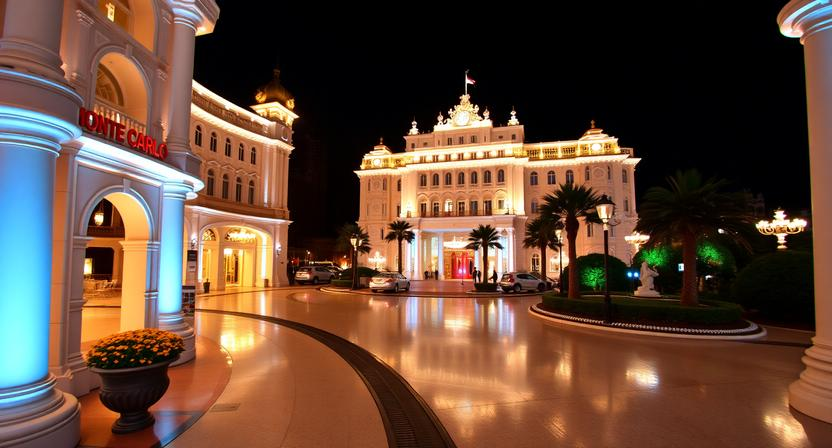
While America wrestled with illegal gambling networks, Europe offered a striking contrast. The continent’s established gambling resorts operated legally, luxuriously, and at the absolute pinnacle of social prestige.
Monte Carlo: The Original Casino Resort
By the 1920s, Monte Carlo in Monaco had been operating its Casino de Monte-Carlo for over fifty years. The casino had been designed deliberately by Charles III of Monaco as a revenue-generating enterprise to save the tiny principality from financial ruin, and it had succeeded beyond all expectation.
The Monte Carlo of the 1920s was the most glamorous gambling destination in the world. The casino’s belle époque architecture, the Mediterranean setting, the proximity to Nice and the French Riviera, and the social prestige attached to having played there made it a pilgrimage destination for European aristocracy and American wealth.
The house edge was clear, the rules were enforced, the clientele was wealthy, and the experience was designed to feel like the most sophisticated thing a person could do with their money. This was the legitimate end of the 1920s gambling spectrum, and its influence on the eventual design of Las Vegas resort casinos was direct and intentional. Bugsy Siegel, who built the Flamingo in 1946, explicitly modeled his vision on European resort casino aesthetics.
Baden-Baden and the German Spa Casinos
Baden-Baden in Germany operated a casino that was, if anything, even more culturally significant than Monte Carlo. The Kurhaus (a spa and entertainment complex anchored by a casino) had attracted European royalty, writers, and intellectuals since the 19th century.
Dostoyevsky famously gambled at Baden-Baden’s casino and lost catastrophically, an experience that directly inspired The Gambler, one of literature’s definitive explorations of gambling psychology. By the 1920s, the casino at Baden-Baden had accumulated a cultural weight that made it less a vice venue than an institution.
Germany’s post-WWI economic chaos made gambling both more compelling and more morally complicated in the 1920s. The hyperinflation of 1923, when the German mark became essentially worthless, created a society in which financial speculation and gambling blurred together in the public mind. When money can lose half its value overnight, the distinction between saving and betting becomes genuinely unclear.
The French Riviera Circuit
The French Riviera’s casino culture in the 1920s attracted the American expatriate community that had gathered there during and after the war (writers like F. Scott Fitzgerald and Ernest Hemingway, artists, aristocrats, and wealthy Americans escaping both Prohibition and the social formalities of home).
Fitzgerald’s Tender Is the Night, which was set largely in this milieu, captures the casino culture of the French Riviera in the 1920s with the kind of ambivalent fascination that defined the era. Gambling in these settings wasn’t just recreation. It was a statement about wealth, sophistication, and the willingness to meet life at its highest and lowest simultaneously.
The Black Sox Scandal and Its Long Shadow
No discussion of gambling in the 1920s is complete without a serious engagement with the Black Sox scandal and what it revealed about the relationship between gambling and American sport.
The 1919 World Series fix, in which eight Chicago White Sox players were paid to lose deliberately, became public knowledge in 1920. The subsequent investigation, trial, and acquittal (the players were acquitted in 1921, though Baseball Commissioner Kenesaw Mountain Landis banned all eight for life regardless) defined how American professional sports would relate to gambling for the next century.
The scandal demonstrated several things simultaneously:
- Deeply Embedded Roots: Gambling was deeply embedded in professional sports. Players were approached because gamblers believed they could be reached, and they were right. The social world of 1920s professional athletes and gamblers overlapped substantially.
- Vulnerability of Integrity: The integrity of sport was genuinely vulnerable. If the World Series could be fixed, anything could be fixed. This fear drove professional leagues to adopt increasingly strict separation policies between players and gambling operations.
- Insufficiency of Private Law: The law was insufficient protection. The acquittal of the Black Sox players demonstrated that criminal law wasn’t well-equipped to handle sports corruption. The response established private governance of sporting integrity that persists today.
The Black Sox scandal’s long shadow extended all the way to the Supreme Court’s 2018 decision in Court v. NCAA, which struck down the federal sports betting ban and opened the door to legal sports betting across the United States. The century-long legal separation between professional sports and gambling was, at its root, a response to what happened in 1919 and 1920.
Gambling Laws: Paper Prohibition and Real Corruption
The legal framework governing gambling in the 1920s was, in most American jurisdictions, comprehensive in its restrictions and essentially meaningless in its enforcement.
Anti-gambling statutes covered most forms of betting. But enforcement required police action. Police action required political will. Political will required political pressure. And political pressure was almost always insufficient when the economic interests supporting gambling were powerful enough.
The mechanism was straightforward: gambling operators paid police directly (through regular cash payments to officers in their precinct), paid political machines (through campaign contributions and direct payments to ward bosses and aldermen), and maintained relationships with judges who could be relied upon to dismiss cases when arrests did occur.
This wasn’t hidden. Urban newspapers of the 1920s regularly reported on the known locations of gambling operations, the names of their operators, and the amounts paid in protection. The transparency of the corruption was itself a form of social stability, everyone knew the rules, including the rule that the rules didn’t apply equally.
The Kefauver Committee’s Later Revelations
It wasn’t until 1950 and 1951 that the full scope of 1920s and 1930s gambling corruption was formally documented, when Senator Estes Kefauver’s Senate Special Committee on Organized Crime conducted the first nationally televised congressional hearings. The committee’s investigation traced organized crime’s gambling operations back to their 1920s roots and documented the political corruption that had sustained them.
The Kefauver hearings are credited with significantly expanding public awareness of organized crime and creating political pressure for genuine law enforcement action, action that would eventually drive the mob out of gambling operations as legal alternatives emerged.
Famous Gamblers of the 1920s
- Nick the Greek (Nicholas Dandolos): A Greek immigrant who arrived in America around 1900, Dandolos was known for his willingness to play for any stakes against any opponent. His bankroll over his lifetime was estimated in the tens of millions, money that came and went multiple times.
- Johnny Moss: A Texas road gambler who spent the 1920s traveling from city to city, playing poker and protecting himself with a revolver. Moss survived the 1920s underground circuit to become a legitimate poker player in Nevada, winning the first World Series of Poker.
- Titanic Thompson (Alvin Clarence Thomas): A proposition gambler who spent his career betting on almost anything, usually with an edge he had carefully prepared in advance. Thompson was present at the poker game the night Arnold Rothstein was shot, and his career spanned the full length of the underground gambling era.
Gambling and Race: A Complicated History
The racial dimension of 1920s gambling in America is important and frequently overlooked.
Formal legal gambling, to the extent it existed, was largely white-controlled and white-patronized. The horse racing culture of Saratoga, the private clubs, the political protection networks, these operated in a segregated social world.
The numbers game in communities like Harlem operated as a parallel economy specifically because the mainstream economy and its institutions were largely closed to Black Americans. Black-owned numbers operations weren’t just criminal enterprises, they were, in many cases, the most significant Black-owned businesses in their communities, providing employment, credit, and social services that segregated institutions denied.
When organized crime (predominantly white and Italian-American) moved to take over Harlem’s numbers operations in the late 1920s and early 1930s, it wasn’t just a criminal takeover. It was a transfer of economic power from Black operators to white organized crime, protected by the same corrupt political system that excluded Black Americans from legitimate economic participation.
Stephanie St. Clair’s resistance to Dutch Schultz’s takeover was therefore more than personal. It was a community’s resistance to economic displacement, fought with the only tools available in a system that provided no legal protection.
The Legacy: How 1920s Gambling Built Modern Casinos
The direct line from 1920s illegal gambling to modern legal casino culture is not metaphorical. It’s biographical.
Meyer Lansky spent the 1920s running illegal gambling operations in New York and Florida. In the 1940s and 1950s, he applied what he’d learned to legal casino operations in Nevada, Cuba, and the Bahamas. He is widely credited with developing the sophisticated accounting and management systems that made large-scale casino operations financially viable because he’d spent decades making illegal gambling operations financially viable under much harder conditions.
Bugsy Siegel spent the 1920s and 1930s in organized crime’s gambling operations before moving to Las Vegas and building the Flamingo Hotel, the casino that launched the Las Vegas Strip. The Flamingo’s design, its resort model, its focus on luxury as a draw, all of it drew on what Siegel had observed at legitimate European casino resorts and on what he’d built in illegal operations.
The operational structures (cage management, credit systems, game supervision, the relationship between casino revenue and political relationships) were developed under pressure in illegal 1920s operations and transferred wholesale into legal Nevada gambling when it became available.
Las Vegas isn’t the opposite of 1920s underground gambling. It’s its legal evolution. The people who built it knew illegal gambling intimately. They made it legal without making it fundamentally different.

Comparison: 1920s Gambling vs. Modern Gambling
| Feature | 1920s Gambling | Modern Gambling |
| Legal Status (US) | Largely illegal, widely practiced | Increasingly legal and regulated |
| Primary Operators | Organized crime networks | Licensed corporations |
| Player Protections | None | Regulatory requirements, responsible tools |
| Access Method | Physical locations, runners | Online, mobile, 24/7 access |
| Fairness Assurance | None (operator controlled) | RNG certification, strict audit requirements |
| Tax Treatment | Untaxed (illegal market profit) | Taxed and heavily regulated by states |
| International Reach | City or regional syndicates | Global digital platforms |
| Information Flow | Extreme asymmetry (operators held odds) | Reduced asymmetry (RTP/odds published) |
Statistics and Historical Data
| Statistic | Historical Detail |
| US Prohibition Period | 1920 to 1933 (13 years total) |
| Chicago Outfit Annual Revenue | Estimated $50 to $75 million in the late 1920s |
| Harlem Numbers Players | Estimated 100,000+ regular active participants |
| Black Sox Scandal Timeline | 1919 fix, 1920 public revelation, 1921 trial |
| Nevada Legalization Year | 1931 (Following Prohibition’s political weakening) |
| Rothstein’s Net Worth at Death | Approximately $3 to $4 million in 1928 (around $50+ million today) |
| Kefauver Committee Documentation | Conducted across 1950 and 1951 to map 1920s networks |
Real-World Examples: The Stuss House
The stuss house was a specifically Jewish-American form of illegal gambling operation, running a card game called stuss (a simplified version of faro) in establishments across New York’s Lower East Side. These weren’t glamorous operations, they were crowded rooms in tenement buildings where working men bet small amounts on card outcomes.
The operators walked an uncomfortable line: providing entertainment their community wanted while depending on the same corrupt police protection that more prestigious operations used. When police decided to make an example, usually when payments were in arrears, stuss house operators were arrested and their establishments shuttered, only to reopen under slightly different arrangements within weeks.
Ultimately, the legacy of gambling in the 1920s laid the foundational bricks for both modern Las Vegas sportsbooks and digital gaming regulations.